Traditional Spanish Colonial Art from Northern New Mexico
Frank L. Garcia creates retablos, bultos, and hide paintings rooted in the devotional traditions, materials, and craftsmanship of historic New Mexico.
About the Artist
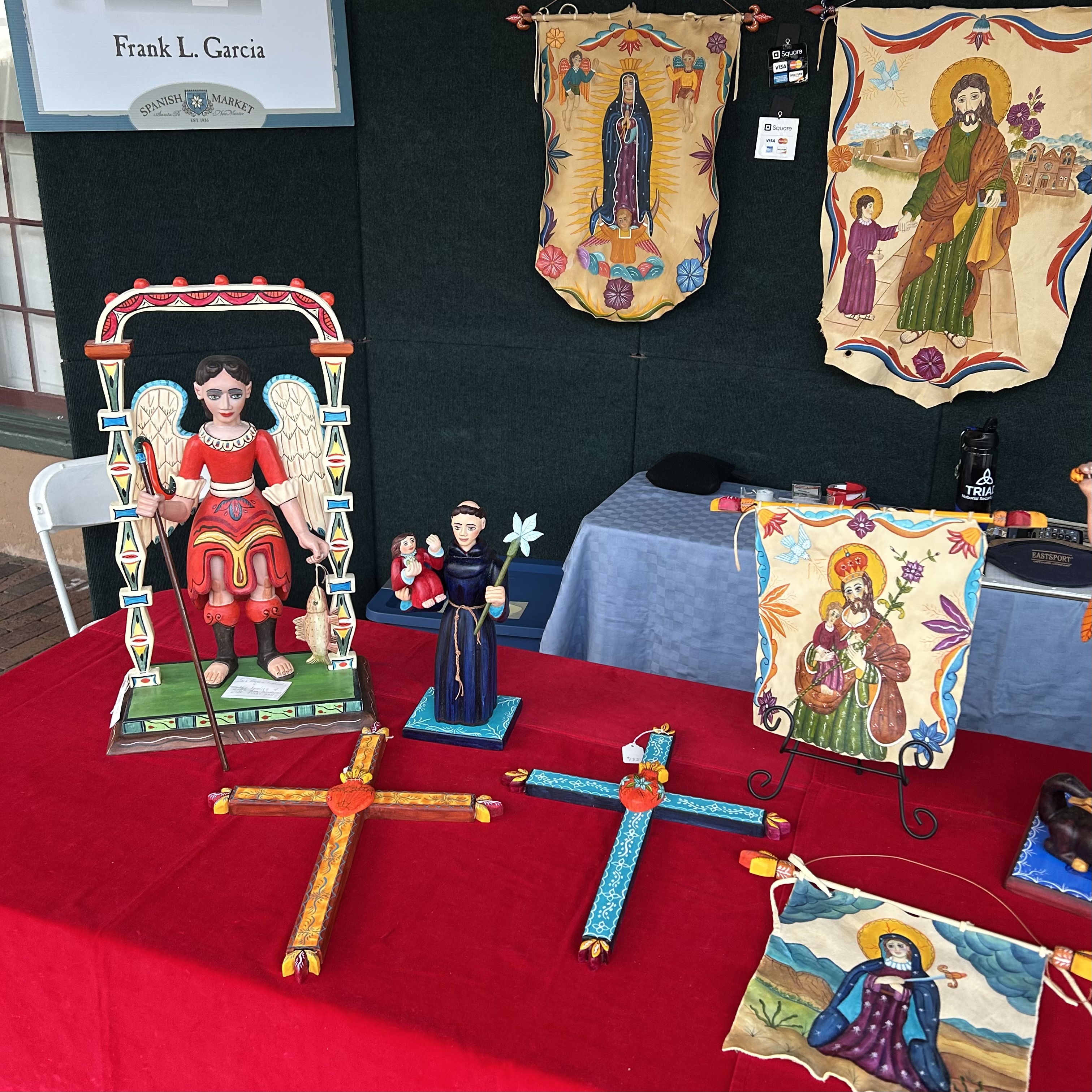
Born in the Pojoaque Valley of northern New Mexico, Frank L. Garcia is a santero whose work honors and continues the Spanish Colonial artistic traditions of the region. His painted retablos, carved bultos, and hide paintings draw from devotional practices rooted in the seventeenth and eighteenth centuries while remaining deeply connected to the living culture of northern New Mexico.
Garcia’s work is shaped by both inheritance and devotion. With family roots in northern New Mexico extending back for centuries, he was raised within a strong Catholic tradition that informed his understanding of the saints, religious imagery, and the place of faith in everyday life. The influence of his grandmother’s devotion became a lasting source of inspiration in his path as a santero.
Originally trained in contemporary painting methods, Garcia later studied with local santeros and santeras to learn traditional approaches to saint-making. Since 1998, his work has received broad recognition and honors. Today, he continues to build upon this lineage through ongoing study, careful craftsmanship, and reverence for the artistic and spiritual traditions of New Mexico.
Tradition & Process
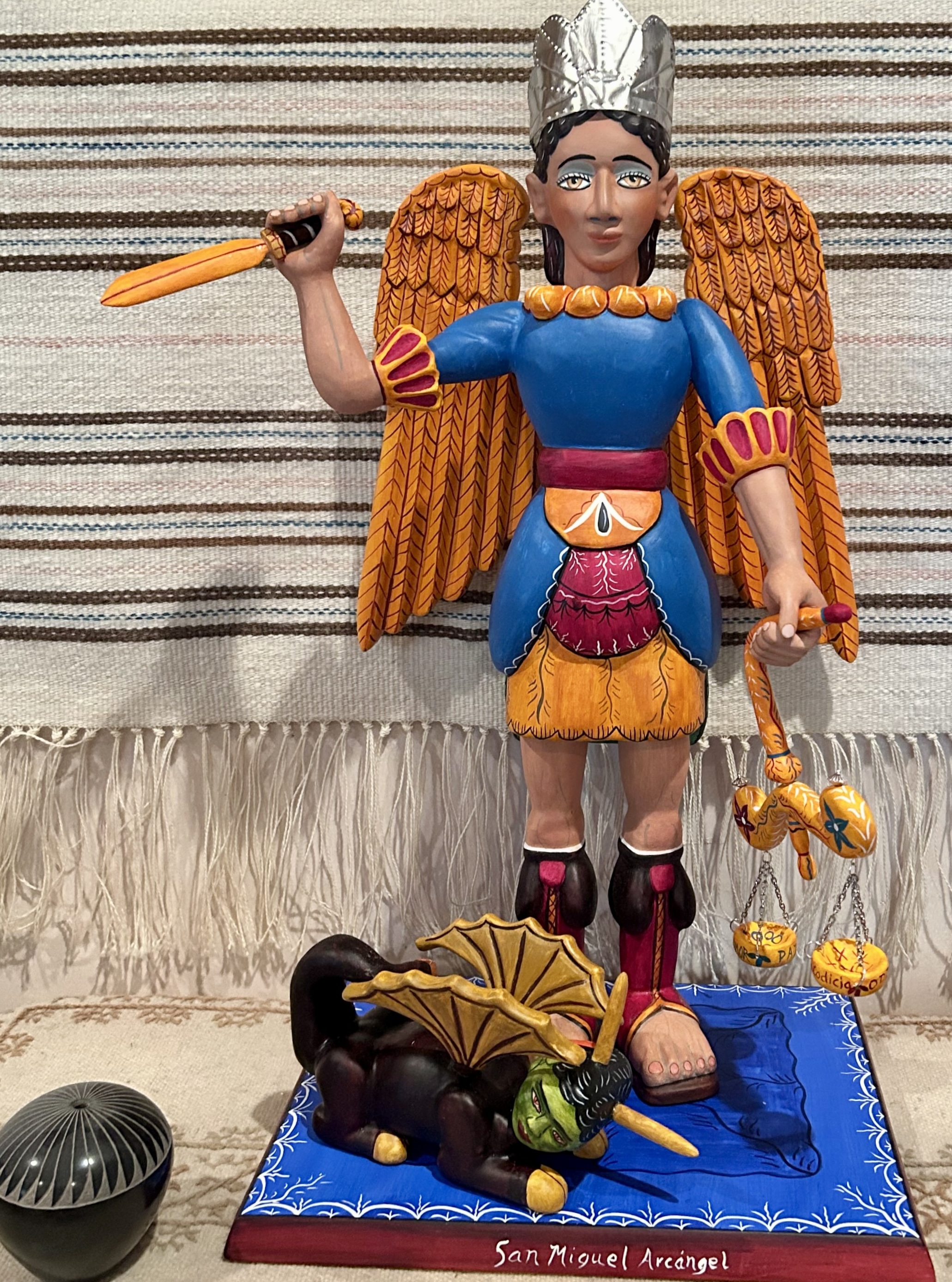
Garcia’s practice is grounded in techniques associated with New Mexican santeros of the seventeenth and eighteenth centuries, with materials prepared and applied by hand.
Natural Materials
Many materials are gathered throughout the year and prepared in the studio for use in painted and carved work.
Traditional Pigments
Cochineal provides magenta and pink tones, while indigo is used for deep blue passages of color.
Handmade Finishes
Handmade gesso, piñon sap varnish, beeswax, and handcrafted tinwork reflect a sustained commitment to traditional craft.
The Work
Retablos, bultos, hide paintings, and tinwork created with attention to faith, form, and regional tradition. Click any image to enlarge.
Retablo
A painted retablo depicting the Holy Family’s journey through the New Mexican landscape, framed by celestial imagery and ornamental architectural motifs.
Retablo
A devotional retablo centered on the Sacred Heart, rendered with bold color, symbolic detail, and a theatrical framing that recalls historic Spanish Colonial altar forms.
Bulto
A hand-carved and painted bulto of Saint Anthony, presented with the Christ Child and traditional attributes of devotion, guidance, and protection.
Painted hide
A painted hide image of Señora de Guadalupe, surrounded by radiant light, angels, and floral motifs that reflect the enduring devotional traditions of New Mexico.
Retablo
A painted retablo of the Visitation, portraying the meeting of Mary and Elizabeth with graceful figures, luminous color, and regional decorative detail.
Historical Tradition
By the late eighteenth century, religious imagery created in New Mexico had become central to both church and home life. Among the most enduring forms were retablos, painted wooden panels, and bultos, carved sculptures of saints.
Another important tradition was the hide painting, one of the earliest documented art forms of the Spanish Colonial period in New Mexico. These works were valued for their portability and practicality, especially in missionary contexts. Unlike retablos, hide paintings were not prepared with gesso, allowing pigments to absorb directly into the surface. Created throughout much of the seventeenth and eighteenth centuries, they remain powerful expressions of devotion, ingenuity, and place.
Garcia’s work carries this tradition forward with deep respect for its historical forms, materials, and spiritual significance.